




The thickest wrapping isn’t always the safest choice. A covering that suits a wooden table may not be right for upholstery or glass, and tape placed directly on a finish can leave marks. Knowing how to protect furniture when moving starts with matching the protection to the surface and handling each piece carefully.
It’s understandable to worry about scratches, stains and bumps during a move, especially when you’re unsure which materials to use. A little preparation can make the process more manageable. This guide explains how to get furniture ready, choose suitable coverings and reduce the risk of damage as items are moved.
You’ll find practical tips for protecting wood, upholstered pieces, glass and mattresses, along with advice on wrapping and safe handling. If a piece is particularly heavy or awkward, professional packing assistance and experienced movers can help take some of the work off your hands.
Key Takeaways
- Learn how to protect furniture when moving by matching each covering to the material and the type of protection it needs.
- Prepare furniture before wrapping it, and keep screws and small fittings together if you dismantle a piece.
- Plan your route and check doorway clearances before carrying large furniture, as wrapping alone won’t prevent knocks.
- Assess whether you can prepare and move each item safely and comfortably yourself.
- Professional packing assistance and specialist handling can help with delicate finishes, bulky dimensions and awkward lifts.
Why furniture needs protection before a move
Furniture protection means preparing and covering each piece to reduce avoidable marks during handling and transit. It helps limit scratches, scuffs, dirt and knocks, but it can’t guarantee that damage will never happen. The aim is to manage the risks before they arise, rather than relying on a covering to compensate for rushed or unsuitable handling.
As items are lifted, carried and placed beside one another, they can shift or brush against walls, doorframes and other furniture. A loose handle might catch on upholstery; an unprotected surface may pick up dust or rub against another object. That’s why how to protect furniture when moving involves both the right materials and careful handling.
- Contact: Furniture can scrape against other pieces or nearby surfaces as it’s moved.
- Exposed edges: Corners and projecting parts can take the force of a bump.
- Dirt and surface contact: Covers help keep dust off and reduce direct rubbing.
- Unsuitable handling: Dragging, tilting or gripping a weak part can stress furniture or mark its finish.
Which parts of furniture are most vulnerable?
Pay particular attention to corners, legs, handles, exposed edges and protruding fittings. These parts may catch on a doorway or another item, while broad surfaces can be scratched through rubbing. Upholstery can also pick up dirt or snag if it brushes against rough or sharp objects. For example, a table corner that meets a doorframe needs padding, as a cover over the tabletop alone won’t cushion that exposed edge.
Wooden furniture may need thoughtful handling as well as a protective layer. The guidance on Conservation and restoration of wooden furniture discusses careful movement, including securing or removing loose elements. A drawer that slides open while a piece is being carried can shift its weight or strike nearby surfaces.
What does good furniture protection involve?
Furniture protection for moving is the preparation, covering and careful handling used to reduce avoidable damage to furniture in transit. The right approach depends on the piece. Cushioning absorbs some impact around vulnerable areas; a barrier helps keep dust away or prevents direct surface contact. One layer may not do both jobs, so choose protection for the risk you’re trying to reduce.
Start by considering what could move, catch or rub. Secure loose fittings and avoid putting pressure on handles or delicate trim. Use padding where a knock is possible, then add a clean cover if the surface needs protection from dirt or contact. Keep coverings in place without using tape directly on a finish that could be marked. A well-protected item is easier to handle with care, but lifting and positioning still matter.
Choose furniture protection to suit each material
The best covering depends on what you’re protecting. A padded layer can soften knocks, while a clean cover mainly helps keep dust off and reduces rubbing. Some items need both. Match the protection to the surface, and avoid assuming that one type of wrap is suitable for every piece. This is central to how to protect furniture when moving without risking marks from unsuitable materials.
Use this comparison as a starting point, then consider the item’s finish and shape:
| Furniture material | Protective layer | Handling caution |
|---|---|---|
| Wood, veneer or polished finishes | Clean, soft barrier; add cushioning at corners and edges | Keep adhesive off the finish and avoid trapped grit that could rub the surface |
| Upholstery | Clean furniture cover to limit dirt and contact | Keep the cover secure without pulling it tightly across the fabric |
| Mattresses | A mattress cover or clean protective bag | Keep the covering intact and avoid dragging the mattress along the ground |
| Glass | Soft cushioning with rigid support where appropriate | Don’t place pressure on the glass or rely on a soft cover alone |
Protect wood, veneer and polished finishes
Begin with a clean, soft barrier between the finish and any heavier padding. This helps prevent the cushioning itself from rubbing directly against the surface. Add padding around vulnerable corners and edges, where knocks are more likely. Never stick adhesive directly to varnish, veneer or a polished finish. Delicate or aged finishes may need tailored protection and particularly careful handling.
Check that the barrier is clean before wrapping: a small piece of grit trapped underneath can scratch as the covering shifts. If a finish seems especially delicate, avoid tight wrapping and handle the item gently rather than pressing layers against it.
Wrap upholstery, mattresses and glass carefully
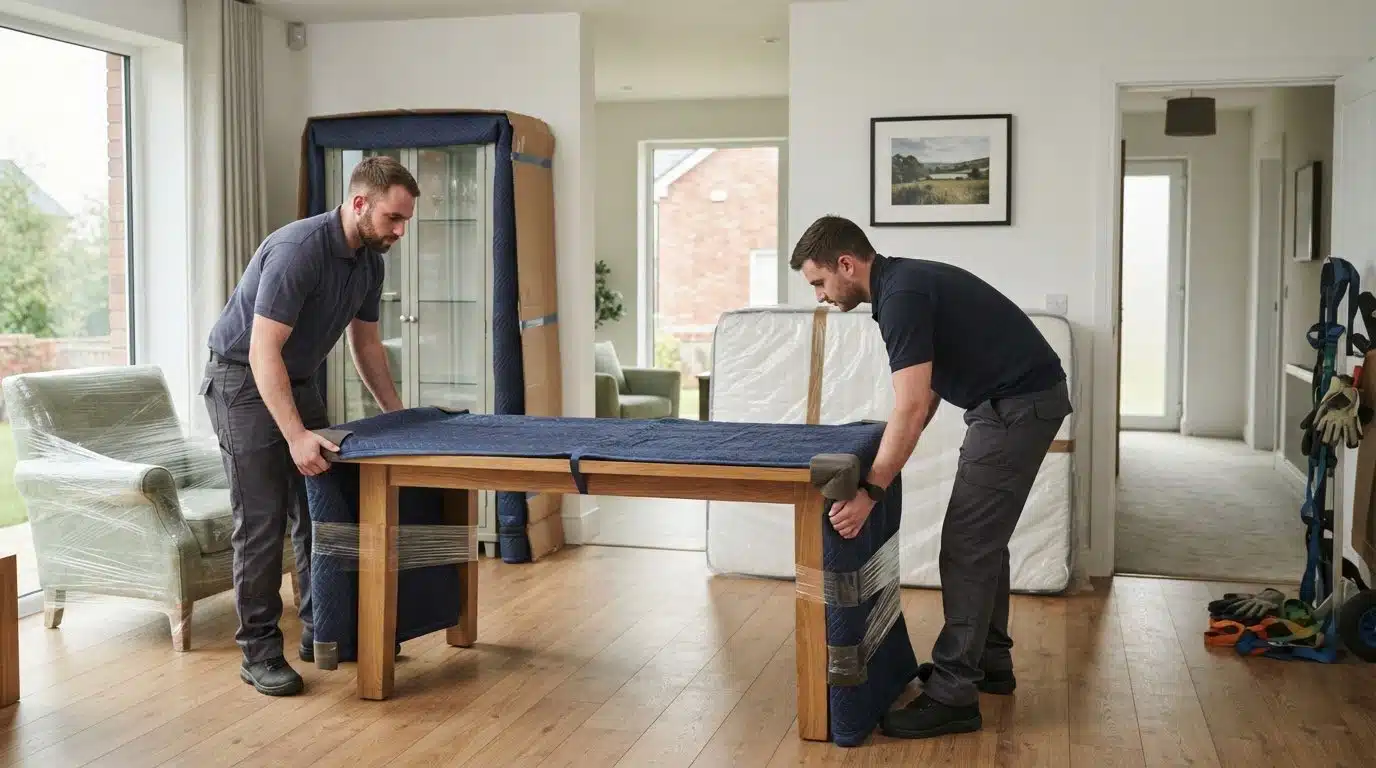
Use a clean cover to protect sofas, chairs and mattresses from dirt during handling. The cover acts mainly as a barrier, not as impact protection, so it won’t replace padding around exposed wooden feet or frame edges. Keep it snug enough to stay in place, but not so tight that it strains fabric or presses into soft upholstery.
Glass needs a different approach. Cushion it to reduce the risk of knocks, then use rigid support where appropriate to help protect it from bending or pressure. Keep wrapping secure without tightening it across the glass. Use separate, suitable protection for each material rather than relying on one layer to guard every surface.
If a piece has a delicate finish or is difficult to protect comfortably, professional furniture packing assistance can help you prepare it for the move.
How to wrap furniture for moving, step by step
A reliable wrapping routine starts before you reach for a cover. Clear the piece, check its condition and choose materials that suit its surface. This keeps dirt from being trapped under the wrap and helps you protect vulnerable areas without putting pressure on delicate finishes.
Prepare furniture before adding covers
Empty drawers, cupboards and shelves, then remove loose cushions and detachable parts that could shift. Clean and dry the surfaces before covering them. If the furniture is complex to dismantle, take photographs as you go so you can refer to them during reassembly. Keep screws and small fittings together in a labelled bag.
- Clear and inspect the piece. Remove loose contents and detachable cushions. Check for existing marks, loose joints or parts that may move, so you can handle them with care rather than wrapping over a problem.
- Clean and dry the surfaces. Dust or grit trapped beneath a cover can rub against a finish during handling. Make sure the furniture is dry before wrapping, particularly if it has just been wiped down.
- Decide whether to dismantle it. Remove parts only if doing so makes the item easier to handle safely. Photograph complex connections before taking them apart, and place screws and small fittings together in a clearly labelled bag.
- Add padding at vulnerable points. Place soft cushioning around corners, legs, handles and projecting fittings first. These areas are more likely to meet a doorway or another item, so give them protection before covering the larger surfaces.
- Fit the outer covering. Add a clean cover over the cushioning to help keep it in place and limit dirt or surface contact. Secure it firmly enough to stay put, but don’t overtighten it or apply adhesive directly to a sensitive finish.
- Check the result. Make sure the covering hasn’t slipped and that no sharp fitting is exposed. The item should be protected without the wrap pulling on upholstery or pressing against fragile surfaces.
Apply padding and secure the wrap
Work from the vulnerable points outwards: cushion exposed edges first, then cover the main surface. Keep the material smooth enough to avoid bulky folds that might catch, but don’t pull it tight across delicate finishes. Protect clean surfaces: don’t wrap dust or moisture against furniture. Label removed fittings: keep screws and small parts together with the piece they belong to.
Wrapping is one part of the job; careful handling still matters. The International Association of Movers (IAM) represents moving and forwarding professionals internationally, reflecting the value of consistent care when preparing belongings for transit. For furniture that needs careful preparation, professional packing assistance can take some of the work off your hands.

Keep wrapped furniture protected during carrying and loading
A good covering helps reduce scratches and knocks, but it can’t prevent damage if furniture is dragged, lifted awkwardly or allowed to shift. Carrying and positioning matter just as much as wrapping. Think through the route and how each item will be supported before moving it, especially if it’s heavy or difficult to grip.
Move furniture without scraping walls or frames
Before carrying a large piece, measure narrow doorways and check the route for tight turns, steps or low clearances. Consider how the item will need to angle through each space, and move obstacles out of the way. Keep padding over vulnerable corners as you pass through corridors, where a small misjudgement can bring an edge into contact with a wall or frame.
Lift and carry rather than dragging furniture across floors or thresholds. Dragging can strain joints and pull protective covers out of place. Use a steady pace, communicate before turning, and pause if the item needs repositioning. Don’t grip a handle, leg or decorative fitting as though it can support the full weight.
Position protected furniture for transit
Once an item reaches the vehicle, position it so it can’t slide freely or press against sharp edges. Keep hard objects, loose tools and other items from rubbing against its surface. A padded covering can soften contact, but it shouldn’t be treated as a substitute for stable placement. Secure the piece in a way that doesn’t crush upholstery or put pressure on glass or delicate trim.
Keep detached parts and their labelled fittings together, rather than placing them loose beside furniture where they could scratch a finish. After carrying or repositioning an item, check that its covering is still secure and that corners remain padded. This quick recheck can catch a slipped layer before the next handling stage.
Use this final check before carrying or loading:
- Are corners, legs and projecting parts still covered?
- Is the outer covering secure without being too tight?
- Is the route clear, with tight turns and clearances considered?
- Can the furniture be carried without dragging or gripping a weak part?
- Will the item stay stable and away from hard, sharp or loose objects?
- Are detached parts and labelled fittings kept together?
These handling steps complete the practical work of how to protect furniture when moving. If a piece is too heavy or awkward to manoeuvre comfortably, experienced movers can support careful handling. Arrange moving support for heavy furniture when you’d prefer help with the carrying and loading.
When professional furniture packing and handling can help
You don’t have to make the same choice for every item. Some furniture may be straightforward to prepare and carry, whilst other pieces call for extra support. Assess each one by its condition, shape and weight, then consider whether you can protect it and move it safely without rushing or putting strain on yourself.
Which furniture tasks may need extra support?
Heavy, awkward or bulky pieces can be difficult to grip, turn and guide through a home, particularly if the route has narrow doorways or tight corners. Delicate finishes and complex shapes can also take more care to prepare, as the wrong covering or rushed handling may cause avoidable marks. If a piece feels unwieldy or you’re unsure how to protect it properly, plan the handling before moving day.
A useful way to decide is to consider each stage: can you prepare the item without damaging its finish, lift it comfortably, and move it through the route without scraping walls or losing control? If one stage feels uncertain, arranging support for that specific task can make the overall job more manageable. There’s no need to choose between doing everything yourself and handing over every item.
For help with careful preparation and moving, explore moving and packing support. Professional assistance can be especially useful for items that need considered packing or are difficult to manoeuvre.
How Local Movers can support a furniture move
Local Movers provides professional packing assistance for household furniture, helping with preparation when you’d prefer not to wrap every piece yourself. This can be a practical option for furniture with a delicate finish, an unusual shape or several parts that need careful attention. You can decide which items would benefit most, rather than treating every chair, table and cabinet in the same way.
For heavy, awkward and bulky items, specialist handling can support the lifting and movement involved. Experienced movers can help manage pieces that are challenging to carry or position, so you’re not left trying to solve a difficult manoeuvre at the last moment. Local Movers has operated for over 25 years, bringing established moving experience to residential and commercial moves across Ireland.
Good planning is the key. Make a short note of the items you’re comfortable preparing and moving yourself, then identify anything that needs a more careful approach. That gives you a clear basis for deciding where professional packing assistance or specialist handling could reduce the workload. It also helps keep the focus on the furniture that needs the most attention, rather than adding unnecessary steps for every item.
Understanding how to protect furniture when moving includes knowing when a task is better shared. If a piece is too heavy, awkward or delicate to manage confidently, arrange support early and let the handling plan match the item.
Make your furniture plan before moving day
Before the move, decide which pieces you’re comfortable preparing and handling yourself and where an extra pair of experienced hands would make the process easier. A clear plan gives you time to arrange suitable support instead of making rushed decisions while furniture is already being carried. Keep your approach practical: protect each item according to its needs, and don’t take on a difficult lift just to finish the job alone.
Knowing how to protect furniture when moving is also about choosing the right level of help. Local Movers can assist with furniture packing and specialist handling for bulky items, so you can focus your own effort where it’s most useful.
Plan your move with Local Movers and take the next step towards a more organised move. With a thoughtful plan in place, you can move forward feeling prepared and confident.
Frequently Asked Questions
Can I use plastic wrap directly on wooden furniture?
It’s safer not to apply plastic film directly to delicate, polished or finished wood, particularly if it’s pulled tightly or has adhesive properties. Direct contact may mark or affect some finishes. Place a clean, soft layer between the wood and outer wrap, then secure the wrap to itself. If you don’t know how the finish will react, avoid adhesive contact and choose a gentle barrier.
Should I empty drawers before moving furniture?
Yes, empty drawers if their contents could slide, fall out or add awkward weight during carrying. For example, items shifting inside a dresser may damage the drawer or make the piece harder to control on a turn. Remove detachable drawers if appropriate and keep them protected separately. If drawers stay in place, secure them without sticking tape onto a sensitive finish.
How do I protect furniture if it rains on moving day?
Keep furniture covered during the trip between the home and vehicle, and minimise the time it spends outdoors. Use an outer cover suited to the item, but don’t seal damp furniture inside it for an extended period. If a piece gets wet, dry it carefully before covering or storing it. This is especially important for wood, as trapped moisture may affect the surface.
Do I need to dismantle furniture before moving it?
No, dismantling isn’t always necessary. Consider whether removing a part will make the piece easier to carry through the planned route, and whether it can be detached safely. Taking apart furniture without a clear reason can create extra work and loose parts. For a complex item, photograph the connections before dismantling it, then keep screws and fittings together with the relevant piece.
Can furniture stay wrapped while it is in storage?
It can, provided the covering suits the material and the storage conditions. Before putting a piece away, make sure it’s clean and dry so dirt or moisture isn’t trapped against the surface. A breathable layer may be more suitable for some furniture. Check stored items periodically, particularly upholstery or delicate finishes, and follow any care guidance that came with the piece.
Should I wrap furniture before the movers arrive?
You can wrap straightforward items yourself if you have suitable materials and can cover them without harming the finish. Avoid tape directly on furniture, and leave difficult lifts or delicate pieces for planned handling if preparing them feels uncomfortable. Tell your moving team which items need particular care, such as a cabinet with a fragile finish, so packing and handling can be organised around them.
