Local Movers (localmovers.ie) specialises in office moves and commercial relocations across Ireland. Whether you run a busy office, or a small office, our trained crew provides careful handling of your desks, IT equipment, filing cabinets and furniture, so your team experiences minimal downtime and no stress on moving day.
Local, fully insured moving company based in Ireland
Trained crew for IT equipment, filing cabinets and heavy furniture
Flexible scheduling for small businesses
Case Study: Youth Action Castlebar Office Relocation
One of our recent projects involved a full office relocation for Youth Action Castlebar, part of the Youth Diversion Project. In 32.5°C heat, the Local Movers crew relocated their entire office setup within Castlebar, including heavy and sensitive items, with zero reported damage and minimal disruption to their work with young people.
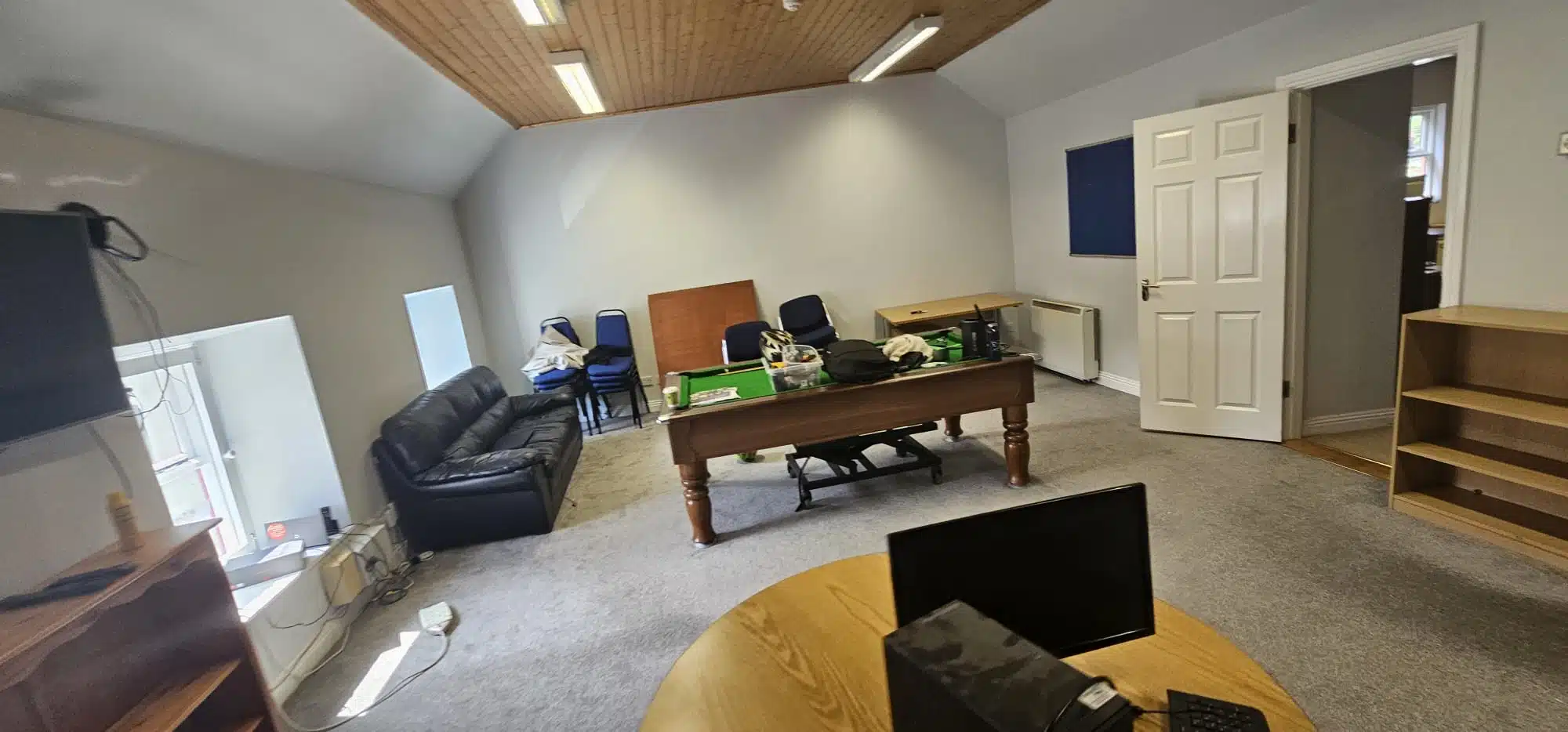
An empty office space with office furniture, including a desk, chairs, and a sofa, ready for commercial relocation by professional office movers.A beige and brown metal filing cabinet stands in an office setting next to a wooden desk with a computer monitor and papers, suggesting a commercial relocation.Empty office space with grey carpet, wooden ceiling, whiteboard, and bookshelf, ready for commercial relocation.An empty office space with a wooden ceiling, a large wooden bookshelf, and gray carpet. Cardboard boxes and packing materials are scattered on the floor near the bookshelf.Navigation app on a car dashboard shows a 1 hr 42 min, 118 km trip to Richard St, with a leaf icon indicating an eco-friendly route.An empty office space featuring a wooden ceiling, a desk, a bookshelf, and a billiard table. A person stands near the door in the background. The room has a professional yet temporary feel with some furniture still in place.A man in a black polo shirt with the “Local Movers” logo helps move a large white desk inside a moving van, showcasing professional commercial relocation services.A professional office mover wearing black Velway gloves and a navy blue polo shirt with a “Local Movers” logo carefully carries a light brown wooden furniture piece.Empty office room with beige carpet, light gray walls, a window, and a corkboard, ready for commercial relocation.Inside a moving van, a wooden desk and shelving unit are being transported, showcasing professional commercial relocation by local movers.An empty office space with filing cabinets, desks, chairs, and scattered office supplies, suggesting a recent commercial relocation or office move.A man wearing gloves holds a large white desk in the back of a moving van parked on a street with a pink and white building and a black fence.Office relocation in progress: boxes and office supplies are neatly organized on the floor next to a tall, empty wooden bookshelf, with office chairs and desks visible in the background.Empty room with hardwood floors, open door leading to a living room with a TV and desk, and clear plastic storage boxes filled with dishes on the kitchen counter.Two Local Movers employees in uniform, one smiling and the other giving a thumbs up, sit inside a moving van during a commercial relocation.Interior of a white moving van packed with office furniture, boxes, and bubble wrap, ready for commercial relocation.Interior view of a moving van packed with office supplies, furniture, and boxes, secured with colorful bungee cords and straps, ready for commercial relocation.Empty office space with a pool table, couch, and desks, showcasing a commercial relocation by office movers.Boxes, a keyboard, and a corkboard are piled up in a room during a commercial relocation, showcasing the organized chaos of office movers.Empty office space with beige carpet, a wooden desk in the foreground, and fluorescent lighting overhead, indicating a commercial relocation.A cluttered office space with furniture, boxes, and office supplies, suggesting a commercial relocation in progress.Newly installed wood-look vinyl flooring in a room with an open white door, a gray speckled countertop, and a recycling bin, suggesting a recent office move or renovation.
Project Overview
Youth Action Castlebar needed to move their office to a new location in town, while keeping their equipment, learning materials and food supplies safe and accessible. Our 2‑person crew and one extra large van completed the relocation in a single day, planning the route and handling to deal with narrow stairs, mixed inventory and extreme heat.
What We Moved
6 office desks and 6 office chairs
Desktop computers x6 and office printers x2
Wall‑mounted TV (including safe removal and reinstallation)
3 large filing cabinets and 1 small filing cabinet
5 sets of bookshelves and 10–12 boxes of books
Kitchen equipment: microwave, mini oven and 7 boxes of fragile utensils
Shredder, laminator and miscellaneous office supplies
Boxes of cereals, pasta, rice, sugar and tinned foods for youth programmes
One full‑size pool table from an upstairs room via staircase
Challenges & solutions
Handling Complex Office Moves with Care Extreme Heat and Crew Safety
On moving day the temperature reached 32.5°C, which can make heavy lifting and handling of electronics more demanding. We planned shorter, intensive work blocks with regular hydration breaks, used proper lifting techniques and controlled handling, and kept heat‑sensitive electronics and food supplies protected and shaded as much as possible.
Moving a Pool Table Downstairs
The pool table was one of the most complex items: heavy, awkward and located in an upstairs room with a narrow staircase. Our movers cleared the route, protected the table with pads, and used two‑person coordination to manoeuvre it safely down the stairs without scraping walls, bannisters or steps. Once downstairs, it was secured on dollies and strapped in the van for transport.
IT Equipment and Food Safety
The office relied on computers, printers and a wall‑mounted TV, as well as stored food for youth activities. We carefully disconnected and labelled cables, wrapped screens, and loaded these items in stable positions within the van. Food boxes were kept upright, separated from heavier furniture and placed to avoid crushing or spillage during transit.
Results for Youth Action Castlebar
The Youth Action Castlebar office relocation was completed within a single day, with all desks, filing cabinets, IT equipment and kitchen supplies arriving in excellent condition. Staff could access their computers, files and food supplies quickly at the new office, meaning youth programmes and day‑to‑day operations continued with minimal interruption.
Key benefits:
No damage to furniture, IT equipment or pool table
Minimal disruption and fast restart of office activities
Safe handling of food and kitchen equipment
Professional, friendly crew that kept the move on schedule despite 32.5°C heat
Q1. What’s the difference between office moving and commercial moving? Office moving usually refers to relocating desks, computers, filing cabinets and meeting rooms, while commercial moving can also include retail units, workshops, warehouses and specialist equipment. Both require planning around business hours, staff safety and protection of assets.
Q2. How far in advance should we plan an office relocation? Ideally, start planning your office move 6–12 weeks in advance, depending on the size of the team and complexity of your equipment. This gives time to complete inventories, confirm dates, arrange packing, notify staff and update utilities, broadband and postal addresses.
Q3. What items do commercial movers typically handle in an office relocation? Professional office movers can handle desks, chairs, filing cabinets, bookcases, desktop computers and screens, printers, servers, kitchen equipment, whiteboards, meeting‑room furniture, archive boxes, marketing materials and sometimes specialist items like pool tables or safes.
Q4. How do you protect computers, printers and IT equipment during a move? Before moving, devices are powered down, cables disconnected and labelled, and screens protected with wraps or foam. Items are loaded upright, secured with straps and positioned away from heavy furniture to minimise vibration, impact and heat or moisture exposure.
Q5. Can you move heavy items like filing cabinets and pool tables? Yes, heavy items such as filing cabinets, large meeting tables and pool tables can be moved with the right equipment and planning. Movers use dollies, pads, straps and team lifting techniques, and may partially empty or disassemble items when necessary to reduce weight and risk.
Q6. How do you minimise downtime during an office move? Downtime is reduced by planning the move outside core working hours where possible, prioritising key workstations and IT infrastructure, and setting up desks and essential equipment first at the new location. Clear labelling and a floor plan help staff find what they need quickly.
Q7. Do we need to pack everything ourselves or can movers pack for us? Most commercial moving companies offer both options. You can self‑pack using supplied boxes and labels, or choose a full packing service where the crew packs documents, books, office supplies and equipment for you, following agreed rules for confidential or sensitive materials.
Q8. How are confidential files and documents handled during office removals? Confidential documents are typically boxed, sealed and clearly labelled before loading. Movers can follow your organisation’s policy on data protection, including securing boxes in specific parts of the vehicle and ensuring they are delivered directly to designated staff or rooms.
Q9. What should we do with food, kitchen supplies and small appliances? Dry goods (cereals, pasta, rice, tinned food) can be packed into sturdy, clearly labelled boxes and kept upright. Small appliances like kettles, microwaves and mini ovens should be emptied, cleaned, wrapped and packed separately, then loaded so they are not crushed by heavier items.
Q10. How do you handle stairs, narrow corridors and awkward access during an office move? The moving team will survey the property, plan safe routes and clear obstacles. Stair moves rely on team coordination, controlled lifting and protective padding on edges. In tight spaces, items may be rotated, partially disassembled or moved in stages to avoid damage to walls and floors.
Q11. Are our staff expected to help with lifting during the move? No. For health and safety reasons, professional movers should handle all heavy lifting. Staff involvement is usually limited to packing personal items, organising files and guiding the placement of furniture and equipment at the new office.
Q12. What information should we provide to get an accurate office moving quote? To receive an accurate quote, share details about the size of your office (number of desks and staff), inventory of key items (IT equipment, filing cabinets, meeting furniture), access conditions (stairs, lifts, parking), preferred dates and any special requirements such as handling of heavy or sensitive items.
Planning an Office Move?
If you’re looking for reliable office movers, Local Movers can help you plan a smooth, low‑stress relocation. Whether it’s desks and computers or pool tables and filing cabinets, we’ll build a moving plan around your building, your inventory and your schedule.
Call us today to request a free, no‑obligation quote for your office move.
Jorge Oliveira is the Founder and Lead Moving Coordinator at LocalMovers.ie, bringing over 15 years of logistics and removal experience to the Irish market. Having personally managed thousands of relocations; from navigating the narrow streets of Dublin and Galway to coordinating cross-county moves to Kerry and Mayo understands that moving is more than just lifting boxes; it's about life transitions.
An expert in fragile packing and complex logistics, Jorge specialises in secure short notice relocation. Through LocalMovers.ie, Jorge is dedicated to raising industry standards in Ireland, ensuring every move is compliant, insured, and stress-free.
Experience: 15 Years in Transport & Logistics
Specialty: Residential Relocations & short notice moving.